
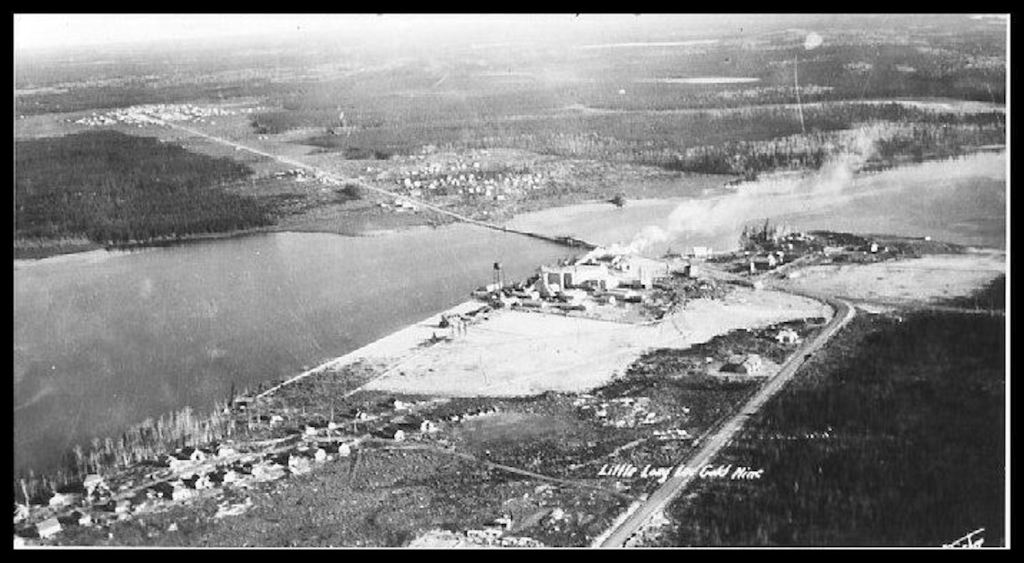
Credit Department of Lands & Forests, Greenstone History files.
In July 1936, a forest fire threatened the town of Geraldton and nearby mining operations and townsites. The aftermath was thousands of acres of standing fire-scarred timber. A local entrepreneur, J.L. Lahti, applied for a permit to salvage the spruce and jack pine before insects damaged them. The Department of Lands and Forests issued him permission on September 12, 1936.
Lahti erected a portable sawmill in the fall of ’36. So great was the demand for lumber and timbers that he built a second sawmill that winter, and by the spring of ’37, Lahti was employing 60 men. A story yet to be told is that many of the employees later came from displaced Japanese families who had been interned during the Second World War as enemy aliens. Many of these “aliens” and their children became pioneers of Geraldton. My wife’s best friend, Atsuko Minaki, passed away recently in a Dryden nursing home, and we withheld the news from Olga to spare her fragile mental condition and to spare her grief.
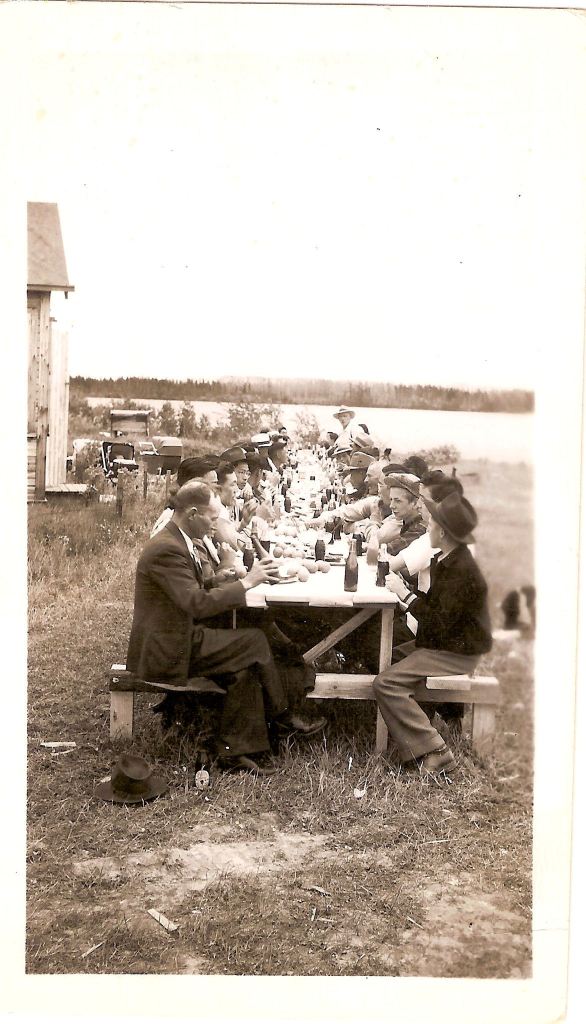
Credit Ann Carlson, Greenstone History files.
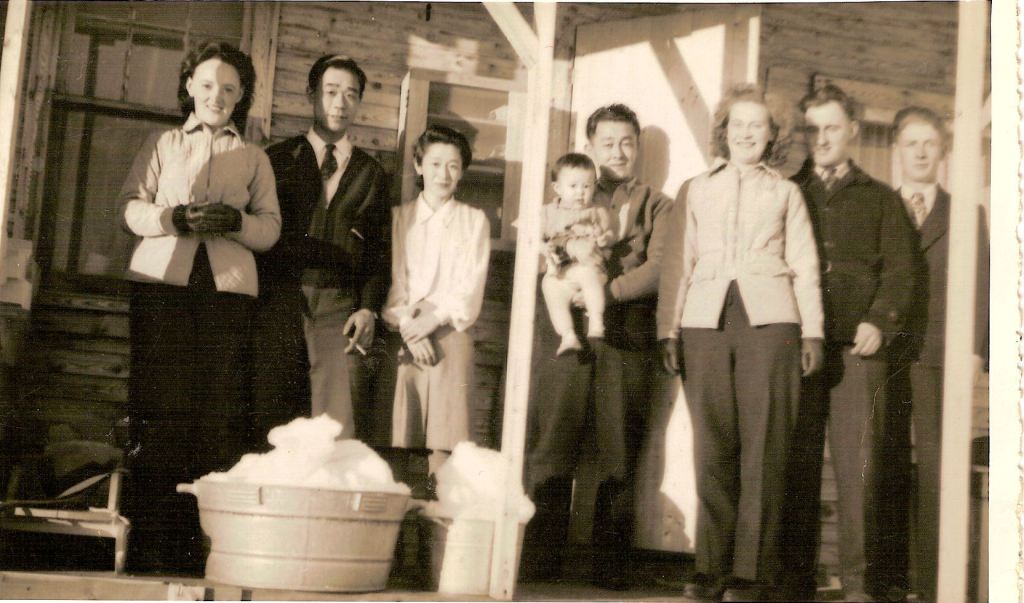
In 1936, the only decent road in the Geraldton district was called the Bankfield Highway. It was a gravel road running west of Barton Bay, Kenogamisis Lake, to the most distant mines, the Jellicoe, the Bankfield, and the Magnet.
J.L. Lahti pioneered a new road starting about a mile down the Highway. It ran south to the southwest arm of Kenogamisis Lake, in the heart of the burned timber. A “townsite” sprang up on the lakeshore, called locally Lahti’s Camp, and about a mile north a second townsite, also surrounding a sawmill, rose a few metres from the Highway. It acquired the colourful name of Peckerville, but not because of some local wags with prurient interests. The dead timber attracted scads of woodpeckers to harvest the insects from the standing trees, and the townsite echoed with the rat-a-rat of strong jackhammer bills.
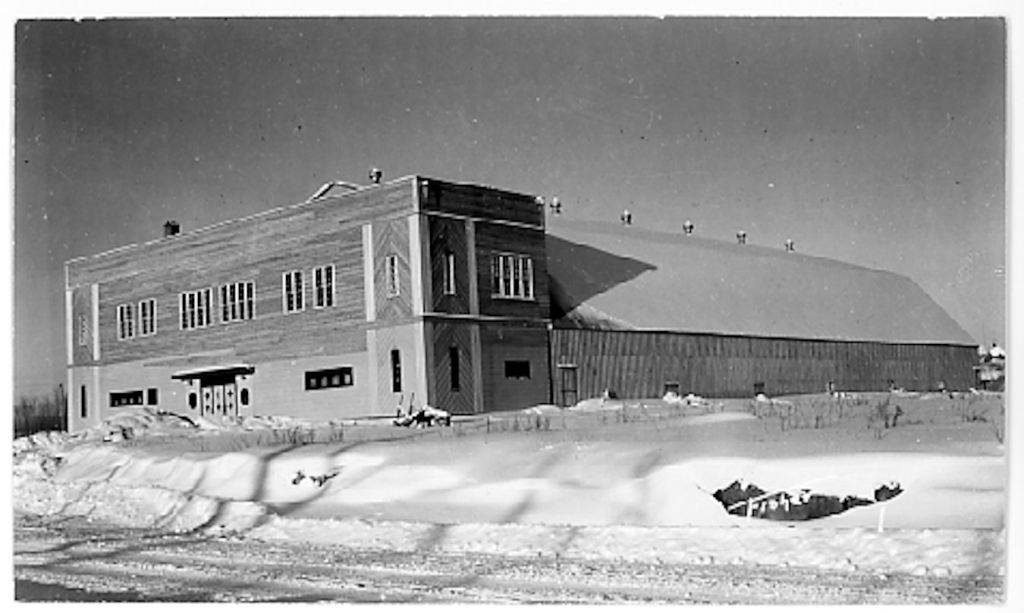
Lahti’s operations were the first commercial logging in the district, and only after 1937 did the second industry, Pulpwood Supply Company, get started in Longlac. Many of the first homes in Geraldton were built from Lahti’s lumber, and a few of the main structures, such as the Errington Arena and the Kenogamisis Golf Clubhouse. Both structures are standing today, although the clubhouse will soon be smothered in the excavated material from Greenstone Gold Mine.
Lahti’s operations continued during the War years, but information is scarce. Here’s a task for future historians.
 E.J. Lavoie's Blog 3
So what my parent’s called Lottiville (or something similar) was actually a lumber camp called Lahti’s camp. I remember going there as a young toddler. (weird that would have been a memory for me). I guess my parents must have known someone there. What would become our house north of the highway in Longlac, was hauled there around 1952-53; and that house came from that camp. When my dad did some renovations in the late 1950’s or early 1960’s we found the insulation used was very minimal, just a bunch of paper bunched up and wood shavings. We also found many unused envelopes lying around in the attic which was covered wood shavings. So if our house came from Lahti’s there must have been others transported there to?
LikeLike
Hi, Louise. Lahti’s Camp was a sawmill, not a logging camp, although logs having to be hauled there might quality it as a logging camp. The workers and their families had accommodations there, so it might qualify as a “townsite”, but there was no town. “Campsite” doesn’t seem the right description. Perhaps it can be described as a live-in logging camp centred around a sawmill. Anyway, thanks for the comment.
LikeLike
So you have no info about houses being removed from there?
LikeLike
Nope.
LikeLike