

A Butterfly Excursion
Edgar Lavoie, with John Walas
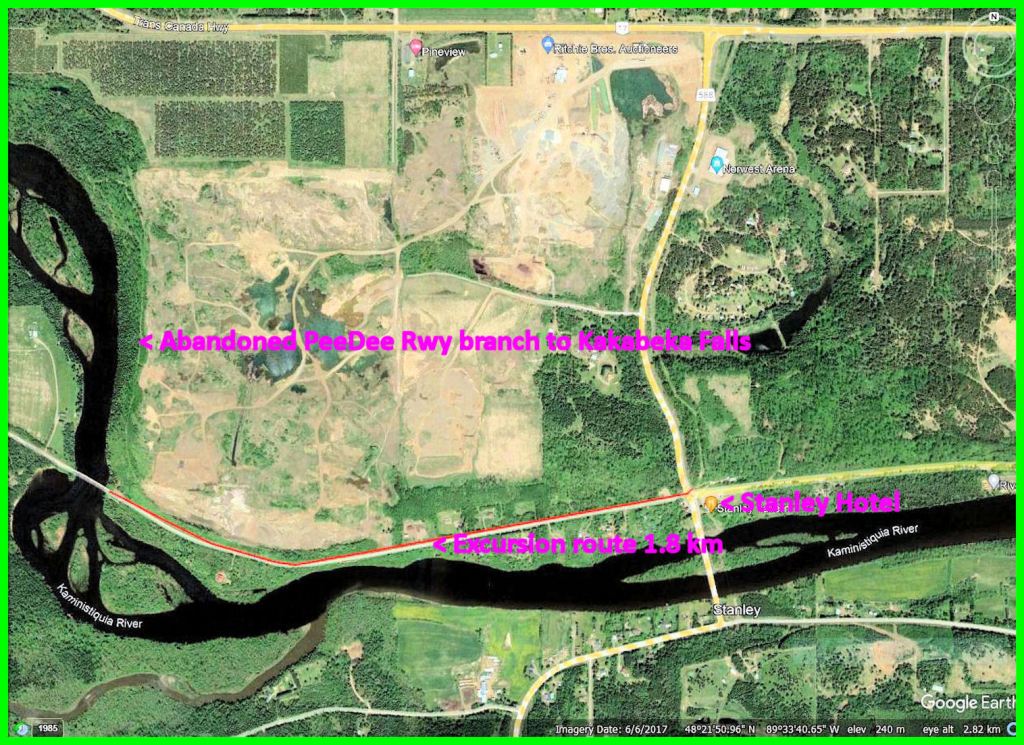
On Saturday, June 17th, Thunder Bay Field Naturalists took advantage of the fine weather. While waiting at the Stanley Hotel for our group to congregate, we walked about 40 metres south on Hwy. 588 to examine the construction. Mike was catching a ride with me. One entire lane of the bridge over the Kaministiquia River was being replaced.


John Walas led our group, numbering 11 naturalists, west on a paved rural road, Harstone Road, walking on the righthand shoulder and in the righthand lane, and crowding right to let occasional traffic squeeze by. Surprisingly, no one honked their displeasure. The thermometer hovered over 25 degrees Celsius. I myself encountered no biting insects.
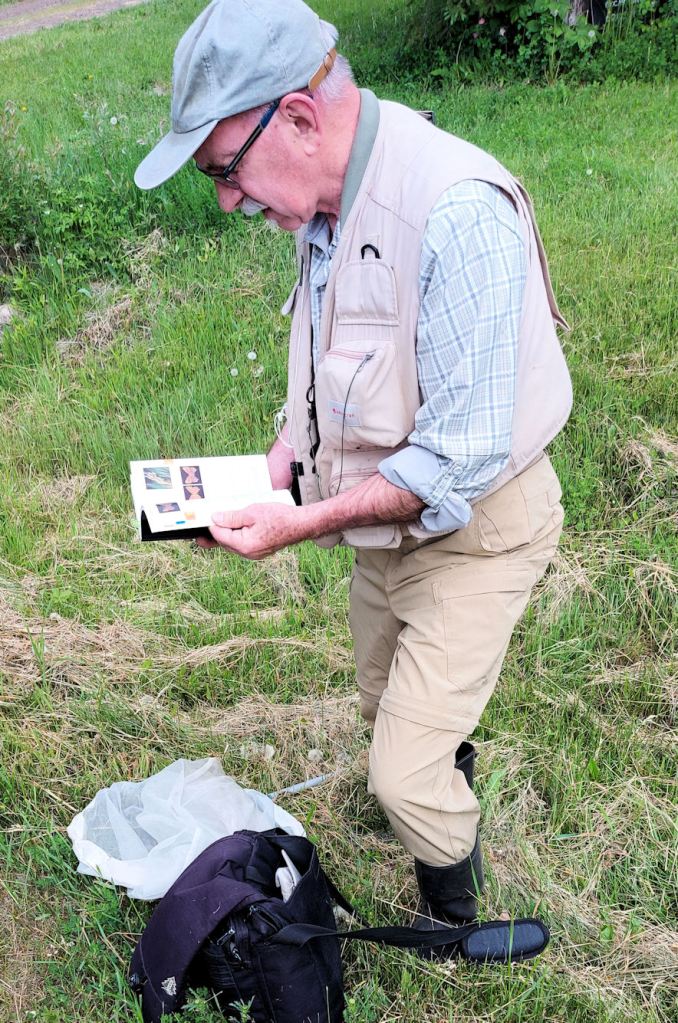
John’s first find was a crippled tiger swallowtail*. This brilliant yellow insect gets its name for the tiger-like black stripes on its wings. In our walk, we spotted several flitting about.
John commented that the swallowtail is a protected species. Its larva feeds on various tree species such as poplar, birch, and pin cherry. Swallowtails can be found gathering (puddling is the correct term) where an animal has urinated; they ingest minerals.
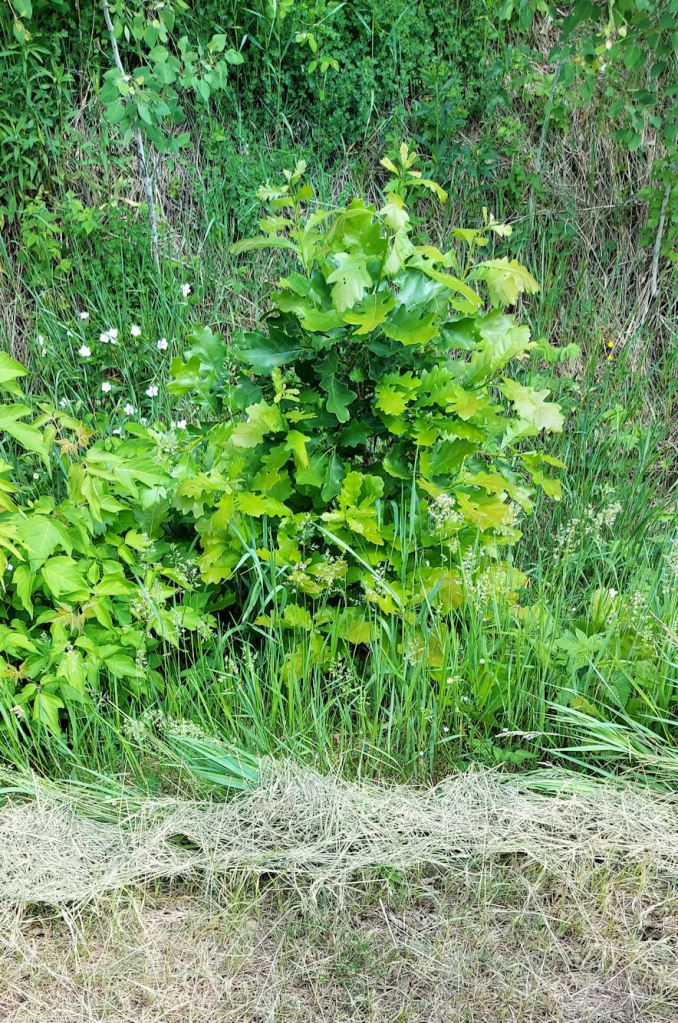
We naturalists were naturally attracted to the roadside vegetation. Pointing out a bur oak shrub, John said that bur oaks are numerous on the old PeeDee Railway right-of-way. I recall, in my visit to Manitou Mounds near Rainy River years ago, bur oak was ubiquitous. Hard to believe that this tree, when fully mature, can reach a height of 100 feet.
By the way, Harstone Road replaced the PeeDee, the Port Arthur, Duluth, and Western Railway. The railway began in Port Arthur in 1893, traversed Fort William, and continued generally westward following the Kam River. It crossed the Kam on what was later called Harstone Bridge.
My camera failed to capture the next find: a common ringlet. John captured it in his net and transferred it to a clear plastic capsule so that everyone got a good gander at it. He was careful to release each captive thereafter. This small butterfly may be sandy yellow to brown, with eyespots (circles, dots, or rings) on its underwings, which may range in number from one to several.
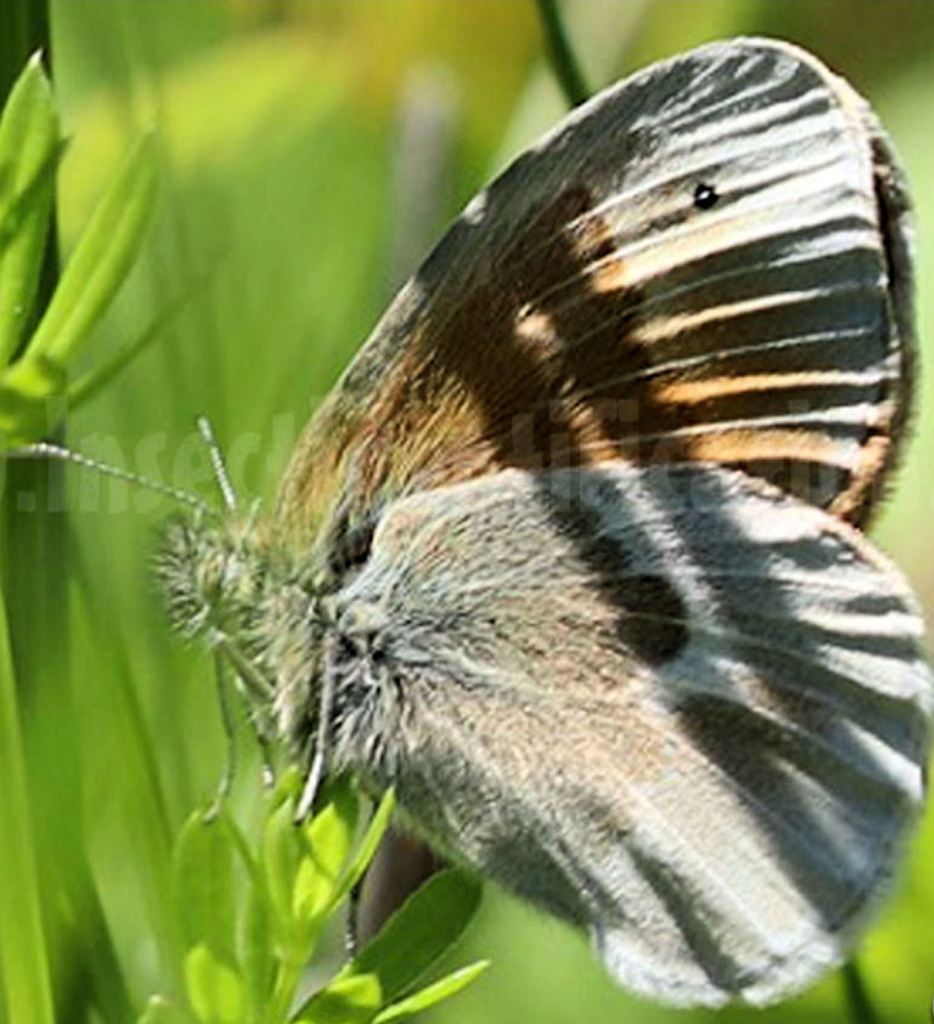
The common ringlet made its appearance only recently in Thunder Bay. John remarked that it has been around the Geraldton area for some time.

Our group had stragglers, I was the chief among them, so we did not always see every one of John’s finds. The white admiral waited for us all to catch up chiefly because it was quite dead. Pretty, but dead. We often find puddles of white admirals on bush trails where some animal has deposited its dung. “Tea parties”, someone commented.
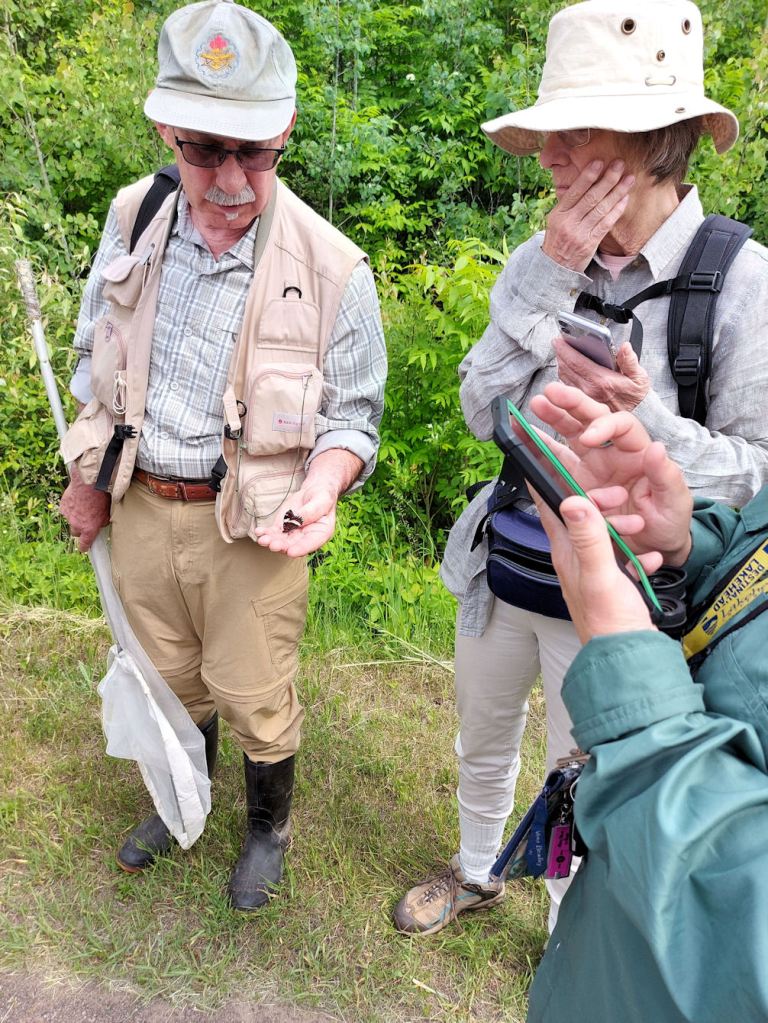
John explained that the larva (i.e., the caterpillar) of this butterfly spins a silk line at the base of a leaf stem. It incorporates part of the leaf and curls it to create a lodging. There it spends the winter, emerging in the spring to continue feeding. It pupates in early summer until it emerges as the recognizable black and white butterfly, the white admiral.
In contrast, one insect was quite frisky. We all recognized the forest tent caterpillar. “Army worm,” someone remarked. I think we all have memories of hordes of army worms devouring lovely foliage, especially trembling aspen. In Ontario, every ten to fifteen years, there is a horrific outbreak, but the trees usually recover later in the season, or in the next year.
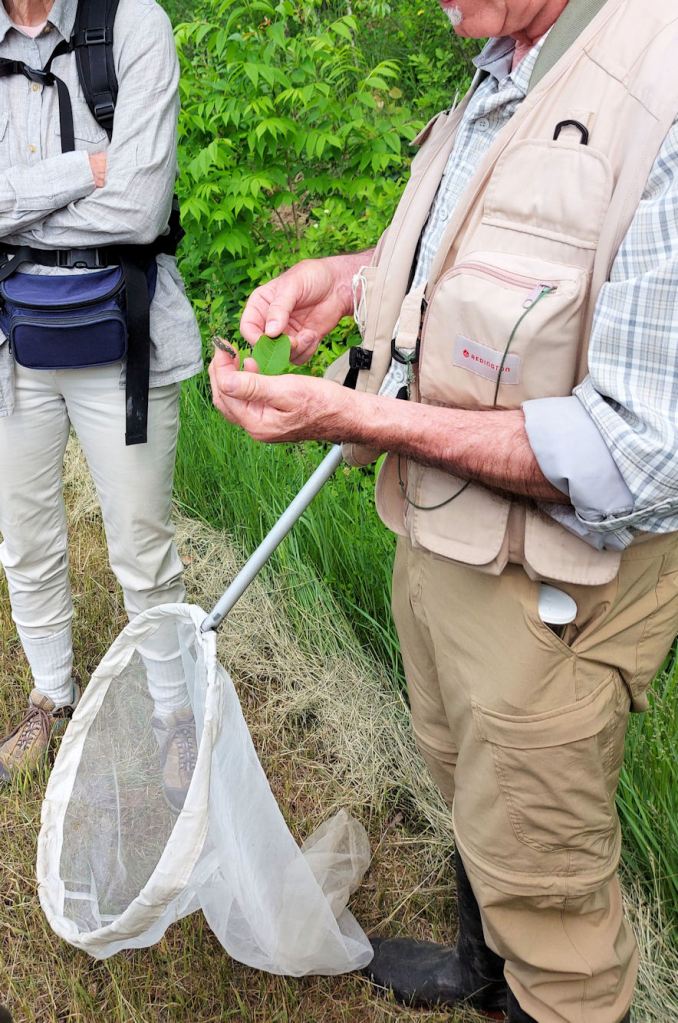
Many people, said John, feel this insect is just a pest, a pest that should be controlled. But, consider these facts. The forest tent caterpillar bestows a huge bounty on birds by providing food for their fledglings. Also, this insect and its companions, by their consumption of poplar leaves, create openings in the canopy and allow younger trees and bushes to grow. And their droppings provide a real boost to the nutrient levels of the decomposing leaves.
The parasites, continued John, that feed on these insects also boost this bounty by adding the dead caterpillars to the biomass nutrient load on the forest floor. The forest benefits in numerous ways.
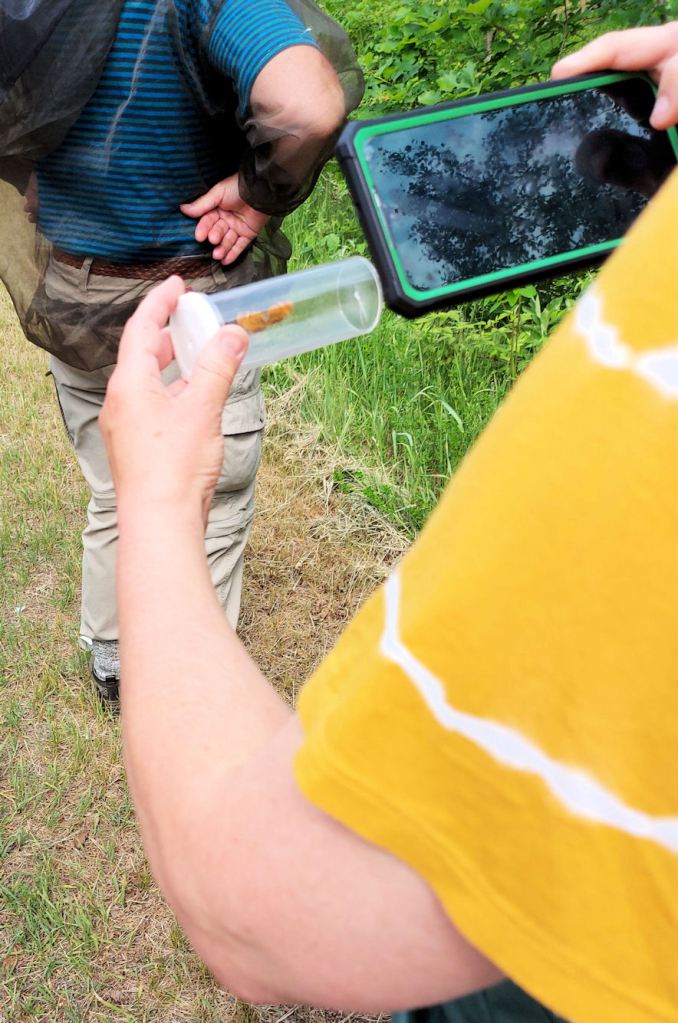
It was a challenge to snap a still image of the northern crescent. It obviously did not understand the transparent cage which held it captive. This small orange butterfly has black borders.
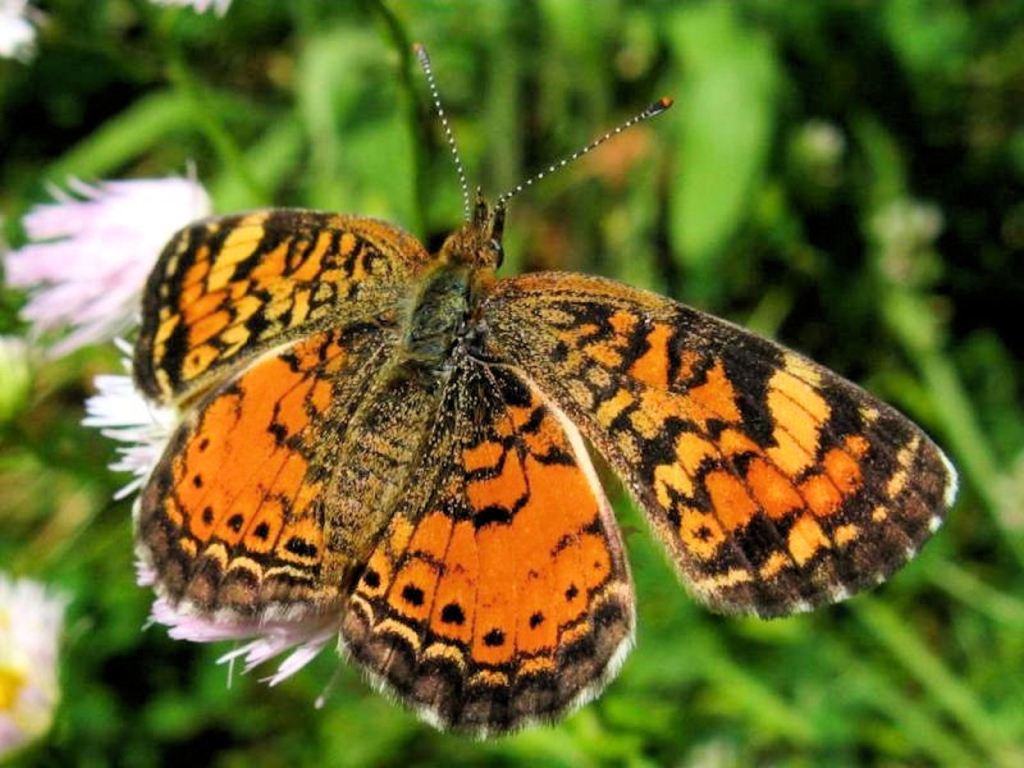
John pointed out that it is one of the more common butterflies in Ontario. The northern crescent and the tawny crescent are found in this area, while the pearl crescent lives in Southern Ontario.
We had started our walk just after 10 o’clock. We reached another bridge across the Kam about noon. On the lefthand side, a short boat-launch trail sloped down to the river. John entertained most of the group on the narrow cobbly shore. I hesitated to try the steep stairs, sans railing, and opted, instead, to check out the bridge.

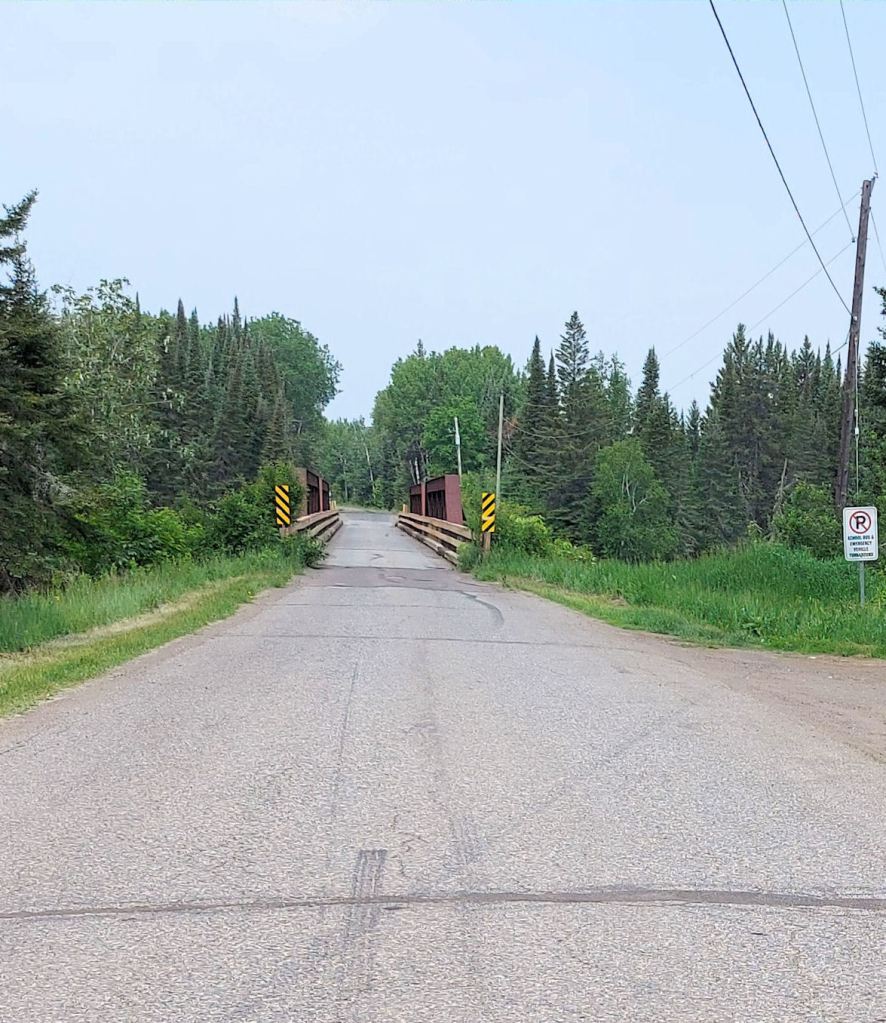
The Harstone Bridge allows one-lane traffic. In 1922, this metal structure replaced a wooden trestle on the original PeeDee railway line. It deserves to be preserved as an historic monument. Perhaps we will wake up one morning to find it has been replaced.
At 12:15, we started back, walking on the lefthand side. Traffic meeting us, without prompting, moved into the righthand lane. What lovely neighbours the hotel has! We arrived back about 12:45. As we milled about, someone suggested a group photo.
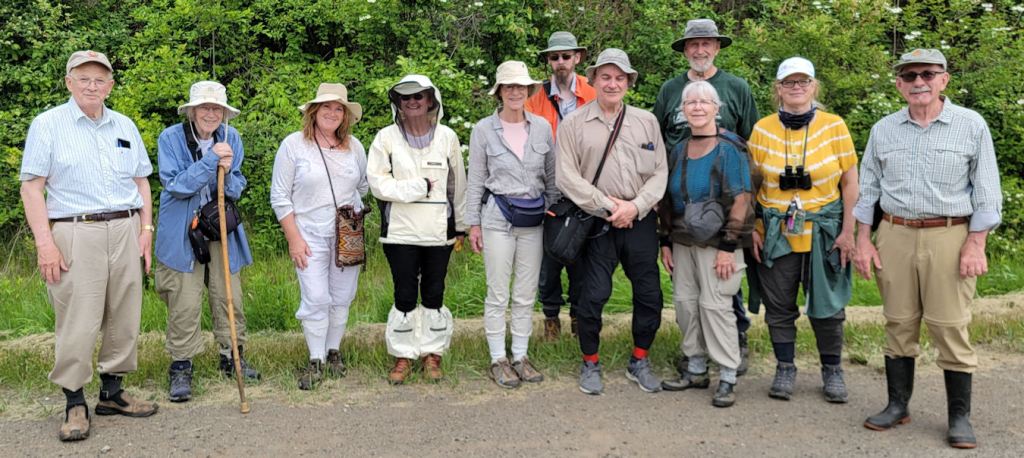
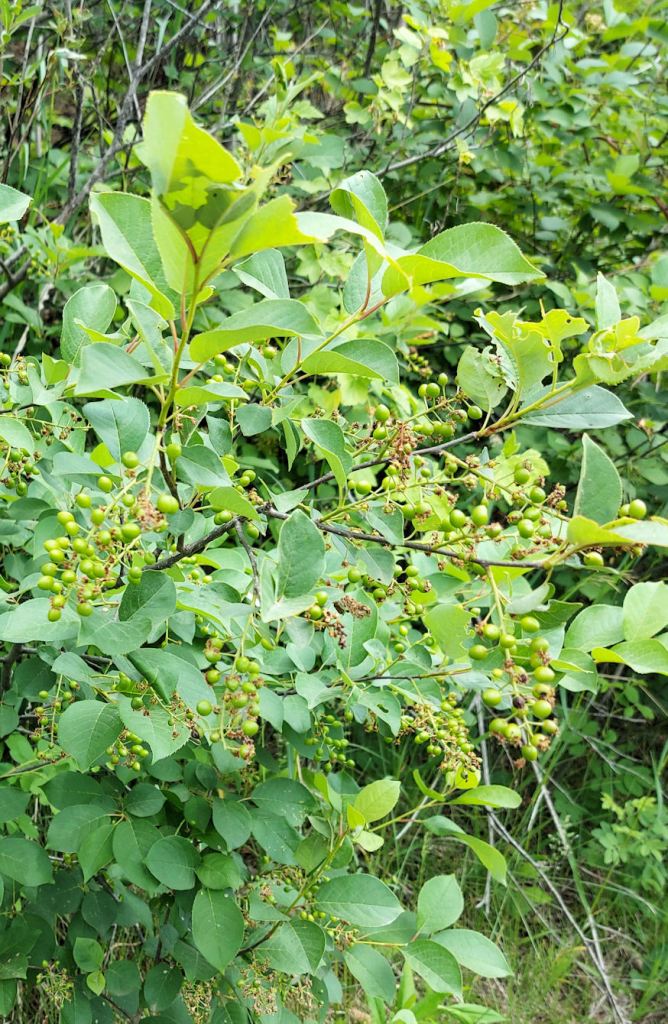
Stanley Hotel was now open for lunch. Most of the group filed in. I left, having another excursion in mind. But not before taking two more still-life pix.
(*Edgar prefers giving insect names in small letters. John and many others prefer capitalizing them.)

 E.J. Lavoie's Blog 3
Very interesting stories about butterflies & your travels !
LikeLike