

Ma-Nee Chacaby spoke a prayer in Anishinaabemowin before setting out on her walk. She was going home, home to Ombabika, walking the railway track.
This documentary film features, and is narrated by, an Ojibway-Cree elder, Ma-Nee Chacaby. It was one of three short films screened on Tuesday evening, May 22nd, at Magnus Theatre in Thunder Bay. The theatre was packed.
I will have to view the film several times in order to absorb it fully. Already my recollection of the film is compromised by the Q & A session which followed. Ma-Nee elaborated on her childhood memories and the philosophy she learned from her kokum, her grandmother.
Not shown nor explained properly in the film, the ghost village of Ombabika is located about a kilometre and a half (1 mile) west of the more material ghost village of Auden. Auden was a creation of the Abitibi Paper Company after WWII. It sat on the Canadian National Railway track north of Lake Nipigon. By bush road today, it is some 90 kilometres north of Highway 11. The closest permanent settlements are Beardmore and Jellicoe.
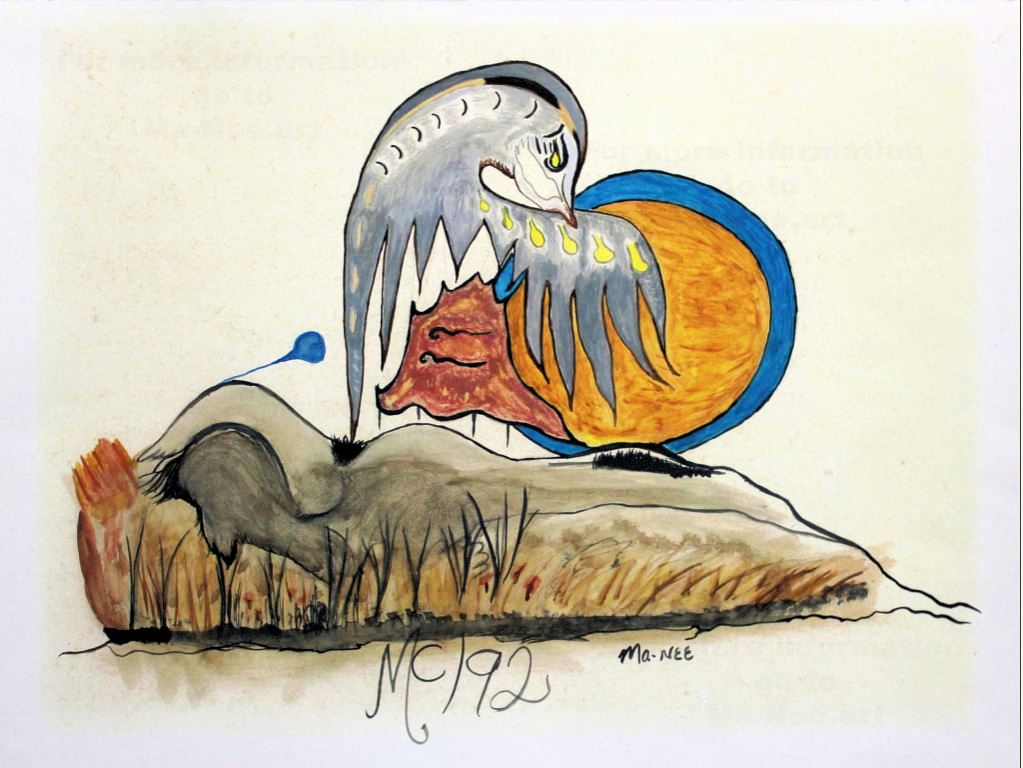
Ma-nee was born in 1950 and raised in the remote indigenous community of Ombabika. We learn in Wikipedia that “Chacaby escaped the Indian residential school system only because she was away hunting and trapping with her stepfather when government agents arrived in the community during the Sixties Scoop”. As an adult, she became a respected activist and painter and published an autobiography “A Two-Spirit Journey”.
During her walk home, she built a fire and fried up some baloney. She joked that they used to call it “baloney steak”. She vividly described, in words and gestures, her childhood encounter with a “black moose” on the railway track that spat steam and smoke and vigorously pumped its arms. She attended school in Ombabika itself. Adults, she said, frequently visited Auden and made friends there, but adults discouraged children’s friendships with “the whites”. She recalled spying on the Auden residents from a hill, and assumimg that whites built homes so close together because they were lonely, whereas her nearest neighbour lived “a mile” away.

A lot of the film was devoted to her visiting Ombabika Cemetery and renewing acquaintance with her relatives and her beloved kokum. For a while she was upset that she could not identify her grandmother’s grave site, but settled upon a small rock cairn or crumbling gravestone. She blessed it with sacred plants and a prayer. She said that she could sense the spirits of friends and family all around her, and sometimes hear their voices.
Prayers played a great part in her spiritual life. Some prayers to the Manitou were requests to give her the strength to endure. Some were praise for the blessings she and her family had always enjoyed. At least once, she prayed to live just long enough to pass on her stories and her wisdom. She emphasized that love is the greatest force in the universe. No doubt some people will be surprised that she did not register recriminations about how life had treated her. And she never once asked for better luck nor for material possessions.
Ma-Nee expressed regret that so much magnificent forest had disappeared. During the Q & A, she recalled one tree that it took “five” people to embrace. She was extremely sad about the mess created by loggers. So much wood was left to rot on the forest floor and never utilized for firewood. At that point, I initiated a round of applause.
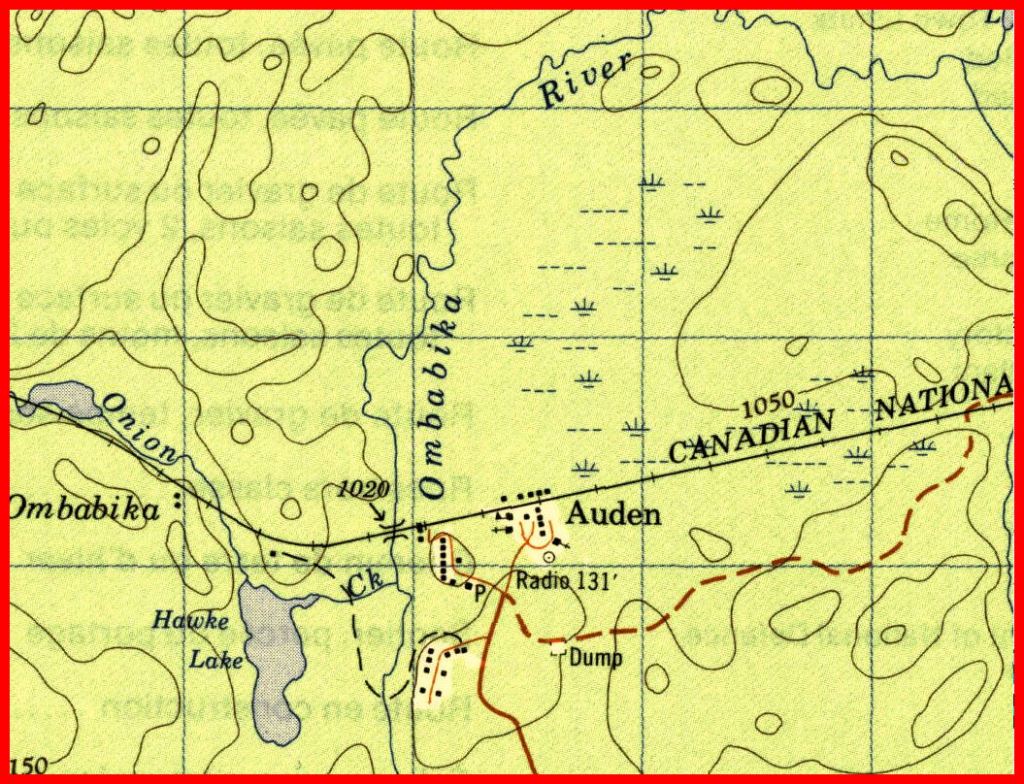
As the Q & A session concluded, I approached her and had time to ask one question: How far west of Auden lay Ombabika? She replied, “Oh, a long way. A long, long way.” Later, ruminating on her response, I concluded she was reluctant to narrow down the location of Ombabika Cemetery. I found the same reluctance among others online.
After all, one does not want one’s home to be overrun by tourists. One’s true home is a secret and sacred place.
 E.J. Lavoie's Blog 3
Wonderful story of Ma-Nee’s life ! God Bless her !
LikeLike