
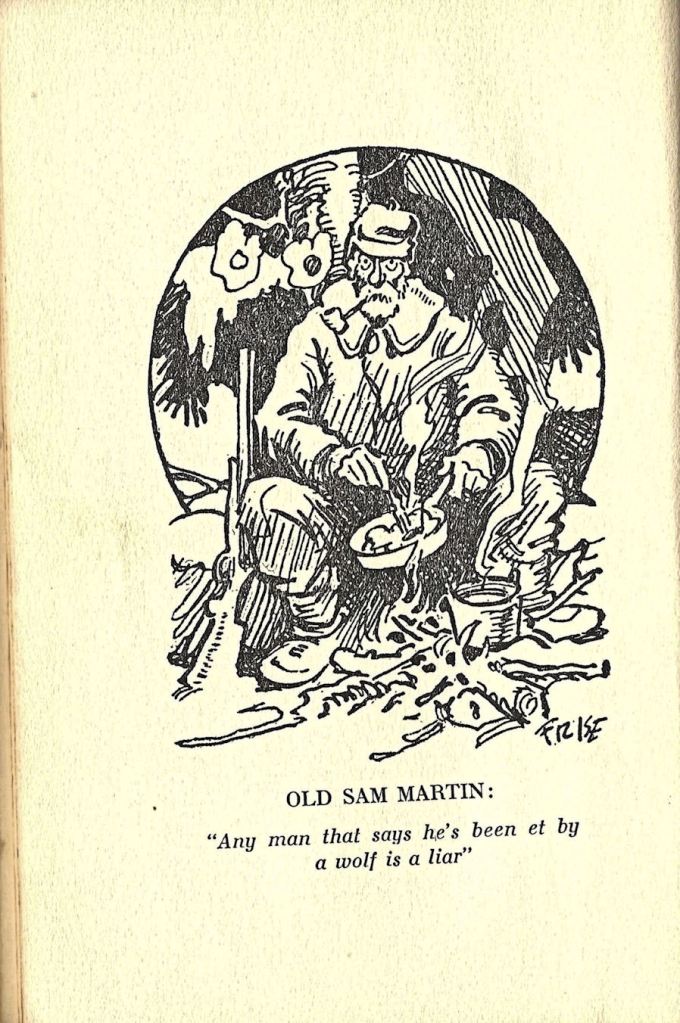
This book by James W. Curran, published in 1940, starts with a frontispiece.
A frontispiece is an illustration or photo immediately preceding the title page. In books published today, a frontispiece is an anachronism. What a shame. But Curran is a writer from the old school, and he is about to teach us about life in the Canadian North.
P.S. There are many Sams in this volume, so pick one that strikes your fancy.

The 255 pages of Wolves Don’t Bite feature stories, photos, and newsy items. The newsy items are placed like endnotes in each chapter, but there the resemble to endnotes ends. In each Part of this critique, I will end with such an item.
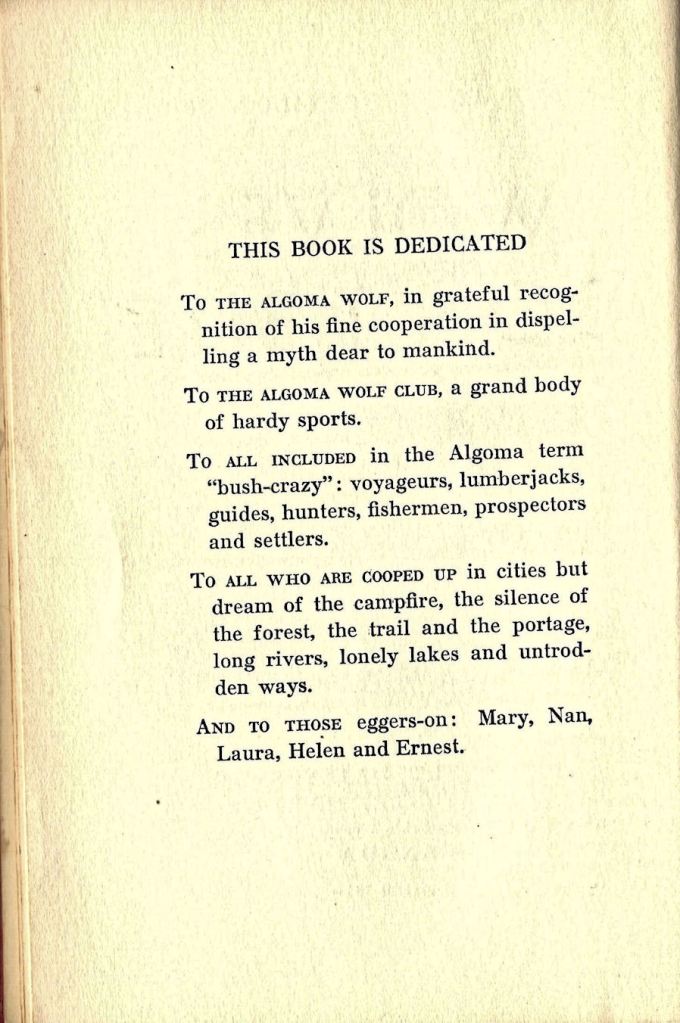
One of the dedications is to the “Algoma wolf”. Without getting into technicalities, consider the gray wolf (also spelled Gray Wolf), Canis lupus, as the species that makes its home in Canada. Related to Canis lupus is the Eastern wolf (Canis lycaon), aka the Algonquin wolf, and sometime aka the Algoma wolf. As far as I can tell, the Algoma wolf in this book refers to both the gray wolf and the Algonquin wolf, and it may take a biologist to know the difference. Only in 1963 was the Eastern wolf (Canis lycaon) identified as a separate species. There are something like 60,000 gray wolves in Canada, and only a few hundred Eastern wolves, centred in Algonquin Provincial Park. Curran was a promoter for the Algoma District, and may have been simply promoting his home territory.
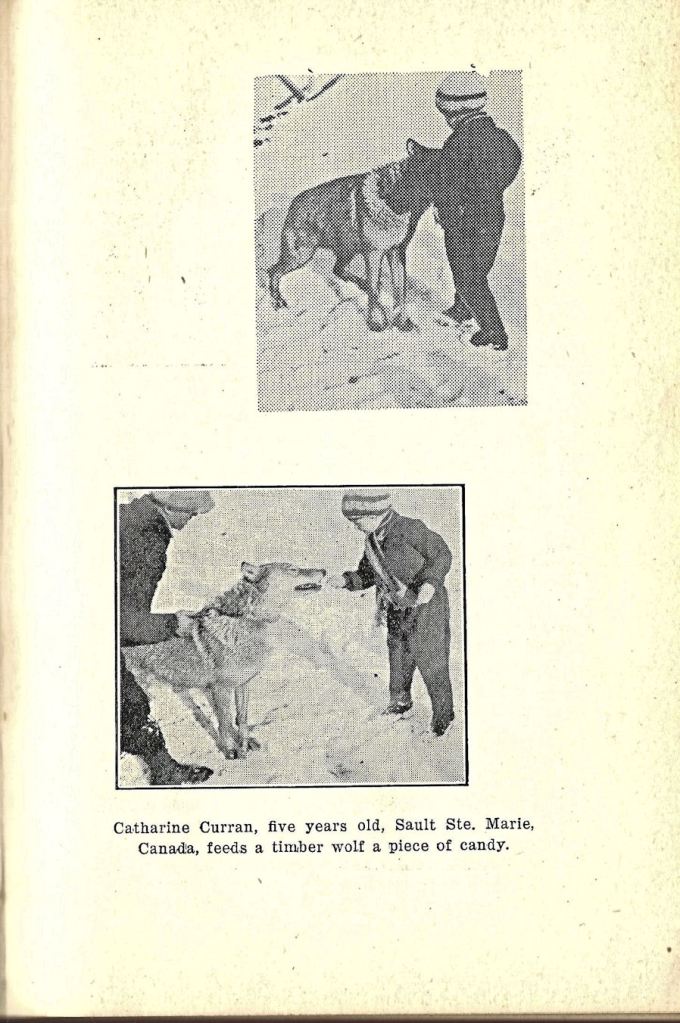
The Algoma Wolf Club was a real sportsman’s club, dedicated to hunting down and killing wolves. Now, Curran had a genuine affection for wolves. There is even a photo of his five-year-old daughter getting a full-grown wolf to eat out of her hand. Stories about hunts and kills must have pained him, but like a true journalist, he wrote them because they were about true life in the Canadian North.
I love Curran’s term “bush-crazy”, and the people he describes are, using my term, bush historians.
Curran comes from a long line of authors who popularized life in the outdoors.
“Eggers-on.” What a charming term. I will bet one Grade-A egg that you have never used that term, nor even read it before.
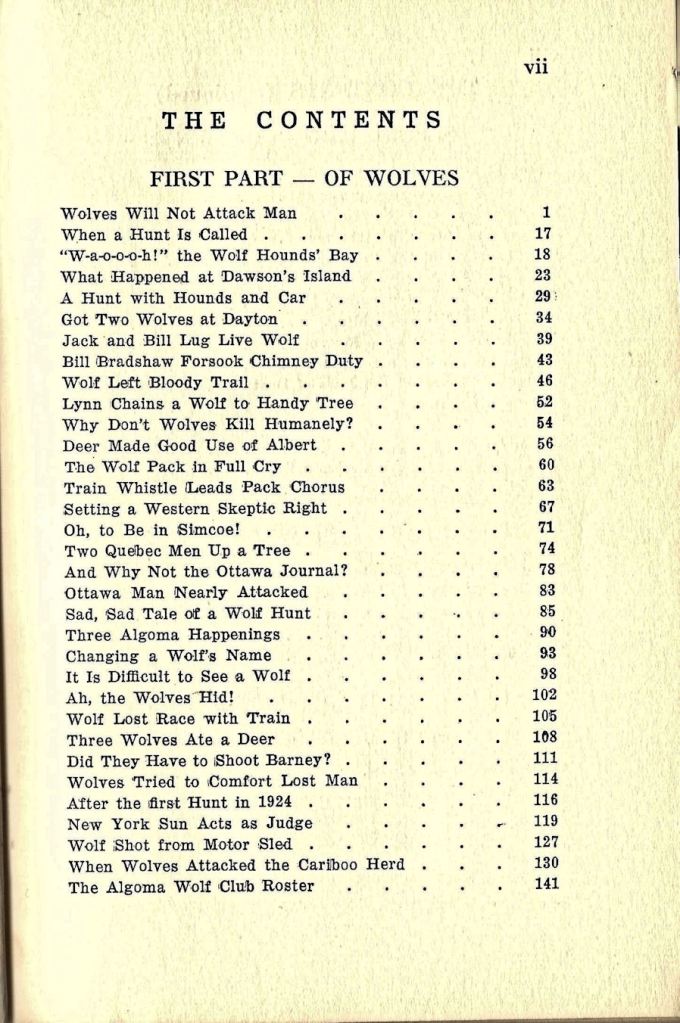
The table of contents omits chapter numbers, an interesting feature. The first chapter, “Wolves Will Not Attack Men” , expresses the thesis of the book. The chapter that begins on page 114 reinforces that thesis.
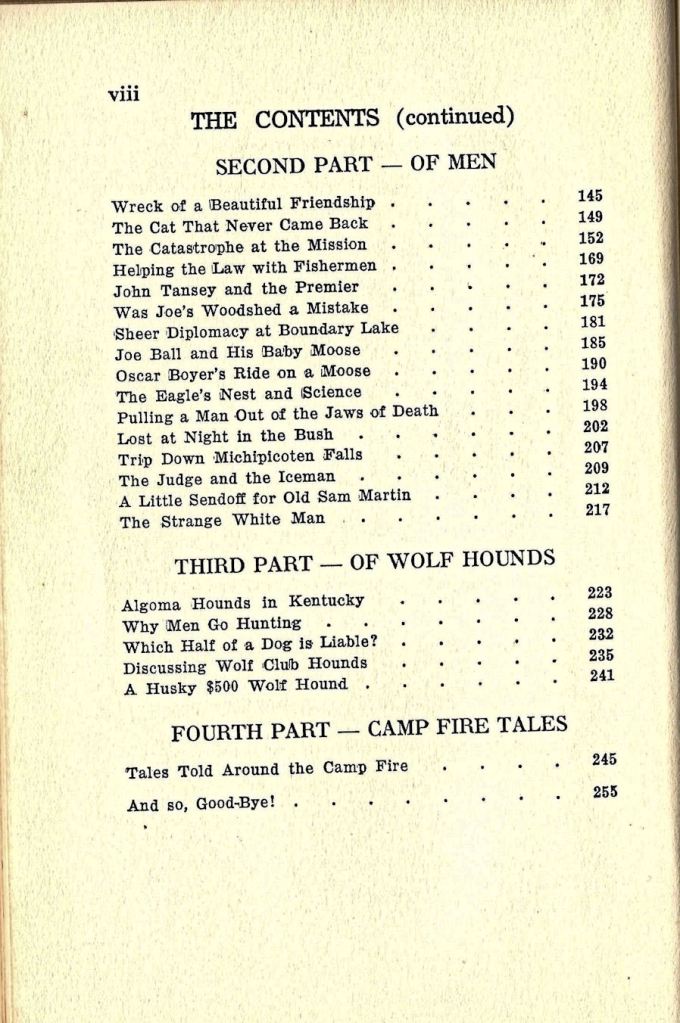
At some point is this serial critique, I shall refer to “Lost at Night in the Bush”. This describes every outdoorsman’s nightmare.
And I shall refer to “Why Men Go Hunting”. Most non-hunters will be surprised. And some hunters too.
[Continued in Part 2]
___________________________________________________________________________________________
A BITE OF BIO
James Watson Curran, newspaper editor and author, was born in Armagh, Ireland, on April 24, 1865. When he was eight years old, his family emigrated to Canada, eventually settling in Orillia, Ontario. The Curran family was in the newspaper business and James’ father owned two newspapers, the Essex Chronicle and the Orillia News-Letter.
– SooToday.com Nov. 30, 2014
___________________________________________________________________________________________
NEWSY ENDNOTE
What is the height of a timber wolf at the shoulder? Algoma guesses around 28 or 29 inches and some hunters go as high as 36. The weight is put at around 80 or 90 pounds, though there are reports of animals of 125 and· even more. The pups are born about May. One Soo litter was of six pups and two of five.
___________________________________________________________________________________________
 E.J. Lavoie's Blog 3