
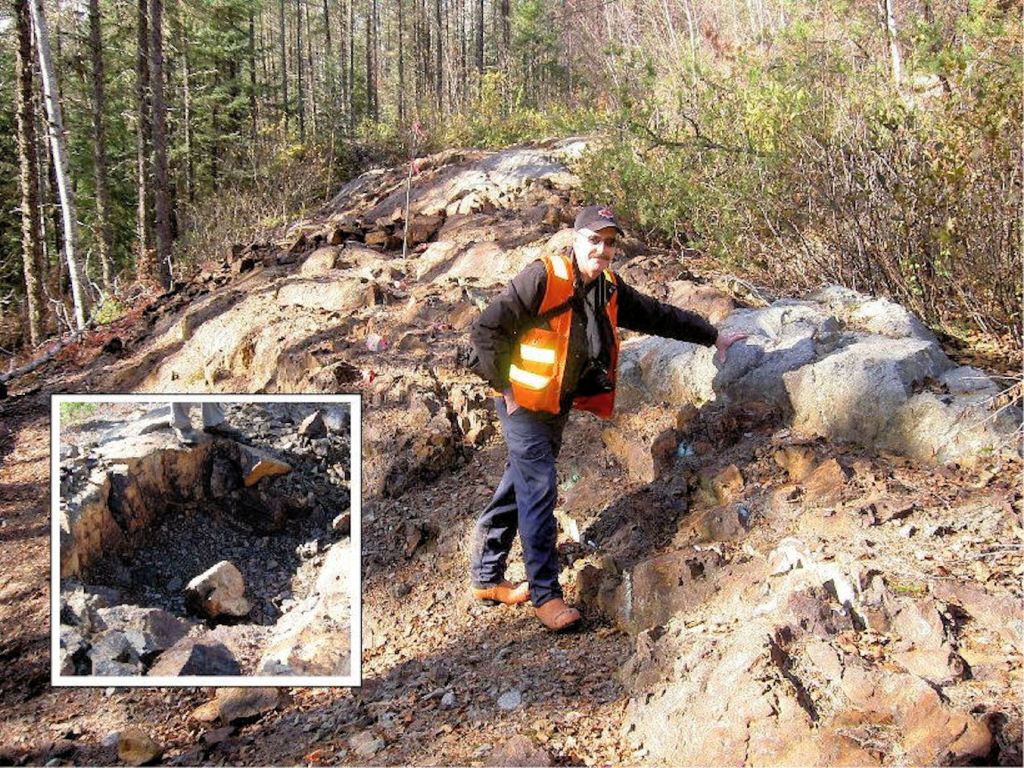
for its nickels (yes, that’s the spelling for the coin)?
An Incident With a CNR Train in 1974
News story from The Vancouver Sun, March 9, 1974:
“DERAILMENT SPILLS COIN
There’s nickel in them drifts
OTTAWA (UPI) ̶ If you need a few nickels and are willing to brave sub-zero temperatures and dig through 14 foot snow drifts, you might find some along an 80 mile stretch of railway in Northern Ontario.
Canadian National Railways confirmed Friday that one of its trains dribbled thousands of dollars of the coins along the stretch of track Tuesday.
The shipment of more than 500,000 shiny 1974 nickels, worth about $27,000, was being shipped from the Canadian Mint in Ottawa to Winnipeg in a rickety old wooden boxcar. The bottom of the boxcar apparently broke at Nakina, Ont., north of Lake Superior.
Mrs. Mickey Popovich, owner of the Nakina Hotel, said an unusual number of nickels have been showing up at stores and taverns.
‘I know of one fellow who found about $400,’ she said. ‘And we’ve got people coming in here all the time paying for things with brand new nickels.’
‘The nickels were spilling all over the place for about 60 miles between here and Cow Pass until so many of them spilled out that the boxcar got derailed.’
She said railway police cordoned off the area where it derailed until it could be put back on the tracks.
‘They brought it in here after, and it was a pretty rickety thing,’ she said. ‘It was an old boxcar made out of wood, the kind that are shorter than the regular ones. It took them about three days to fix it.’
‘I don’t know why they didn’t use a better car to carry money.’
In Ottawa, Transport Minister Jean Marchand said that about $10,000 worth of the coins had been recovered by railway crews. He said the railway had been trying to keep the loss secret so nickel hunters would not swarm to the area.”
WRITER’S COMMENTARY:
The Vancouver Sun was fed this item by UPI, United Press International, an American news sharing service, but the article was apparently first published in Ottawa (according to the dateline) and then syndicated. A couple of days later, it reached Whitehorse in the Yukon.
“DERAILMENT”? There was no derailment. This report says the coins “dribbled . . . along the stretch of track”. That is true.
The headline reads “There’s nickel in them drifts”. This is obviously a play on that memorable phrase coined by Mark Twain, “There’s gold in them thar hills”. But the headline and the report do sound like a Wild West scenario. Someone on the UPI editorial desk was having fun.
And “14 foot snow drifts” does not describe any condition ever known in Northern Ontario. In the Rocky Mountains, maybe. The report is right about sub-zero temperatures. A reasonable guess, not a reported fact.
As for “80 mile stretch of railway”, the railway distance from Hillsport (not mentioned) and Nakina (again, not mentioned) is 89 miles, close to 90 miles.
And on which “Friday” did CNR confirm the report? March 9 is a Saturday. The previous Friday would have been March 8, when CNR supposedly confirmed the report. But, the report states the spill occurred on the previous Tuesday, which would make it March 5. The spill occurred on Friday, February 22. So, any report of a spill on a Tuesday is way out of whack. CNR would have reported the spill on Friday, February 22, or on Saturday at the latest.
A quantity of 500,000 nickels would have a value of $25,000, so that figure of $27,000 sounds right. However, other reports state that was the quantity lost, not shipped. Lord knows how many were shipped, but certainly only a fraction of the shipment dribbled. And, the shipment was destined for Regina, not Winnipeg.
If the container “broke at Nakina”, that means nickels dribbled 80 or 90 miles west of Nakina. The first alert about the dribbling actually occurred at Hillsport, 89 miles east of Nakina.
Now the story references “a rickety old wooden boxcar” with a faulty floor. The container was actually a modern metal transport trailer which was piggybacking on a flat car, and a faulty door latch may have precipitated the dribbling. However, early speculations about the cause of the loss did reference wooden boxcars and faulty floors. This was not reportage, this was pure speculation. By the way, it was Mr. John Popowich, not his wife, who owned the Nakina Hotel.
Note the contraction of the “80 mile stretch” to “60 miles”, and the pure invention of a Western-sounding community of “Cow Pass”. And one has to overwork the imagination to have the boxcar break at Nakina and couple it with a derailment at an unspecified location all the while it is dribbling nickels.
Let us be clear: there was no derailment. It makes sense that the police cordoned off an area in the Nakina rail yard while CNR employees scrambled to pick up nickels. Were they “railway” police? No, not at Nakina. Certain it was that Nakina had a detachment of Ontario Provincial Police, one or two officers, and that they helped out.
We may never know if Mrs. Popowich’s remarks about the rickety boxcar came from speculations about the coin container, or if the quote was made up of whole cloth by the press. Certain it was that there was never any old rickety boxcar. By the way, the correct spelling of her name is Mrs. Mickie Popowich, married to John Popowich, the hotel owner. This is the first mention of any Popowich in the press. Further mentions had to wait for reports on June 1 from The Toronto Star and The Globe and Mail. It appears that some enterprising reporter did call Mrs. Popowich at the Nakina Hotel on March 8, but she drew many of her alleged facts not from personal observation but from speculations rife at the time.
The final paragraph, referencing remarks by Transport Minister Jean Marchand, has an element of truth. However, the figure of $10,000 worth of nickels recovered is pure fabrication. This is the complete answer received by Marchand in Question Period, House of Commons, on March 8: ” Hon. Jean Marchand (Minister of Transport): Mr. Speaker, I know now that the hon. member was quite right and that the railway lost a certain amount of money in the form of nickels. How much I do not know. They [CNR] want to keep the amount secret because they say they are not sure. These coins were spread over a distance of about 80 miles.” (Hansard)
If CNR was inwilling to elaborate further in response to a question put to them by a high profile Cabinet Minister, what hope has the historian for official confirmation of the details in the case?
ARTICLE CREDITS
News clips from The Toronto Star, The Globe and Mail, North Bay Nugget, The Windsor Star, and Vancouver Sun Times. It is curious that the local papers, namely Geraldton’s The Times Star andThunder Bay’s The Chronicle-Journal and The Times-News, all of which cover the area of the spill, had not so much as a mention.
Thanks to Claude Nadon and Bonnie-Carol Cook for locating and forwarding many news clips.
Thanks to the railroaders, now retired, who related their first-hand knowledge: Barry Scott, Michael Gifford, Jeff Whelan, and Miles Borsa. James Bodner supplied a marvelous description of railway piggybacking then and now.
Thanks to these particular people who shared their experiences of finding and gathering nickels: Tom Igarik and Tony Cargelutti,
Thanks to the many people who gave snippets of information that went into this story, and thanks to Nancy Creighton for pointing me to Tom Igarik’s blog.
This post has been this writer’s first historical article to depend so heavily on the not-always-dependable social media.
(Continued in A Footnote)
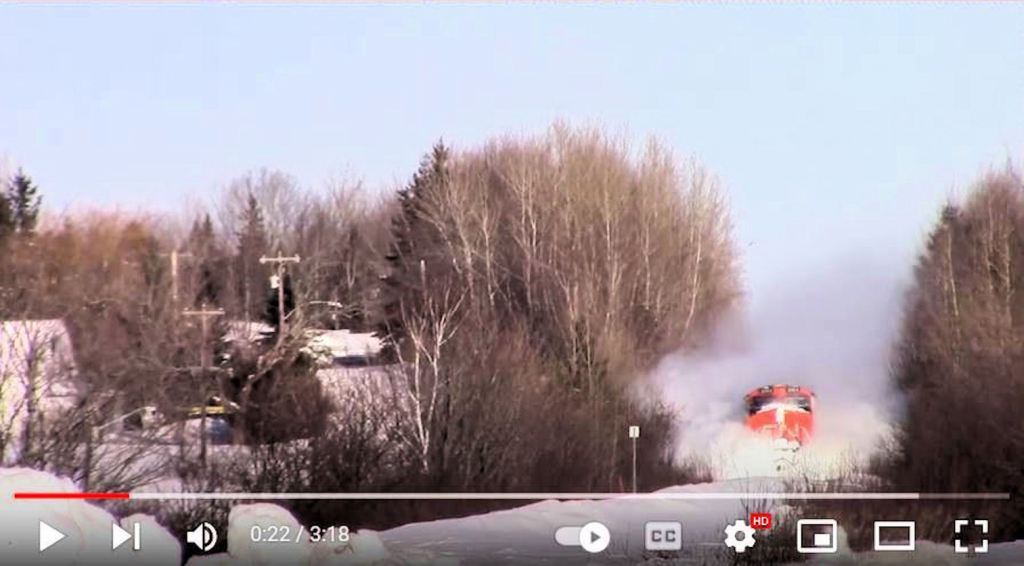
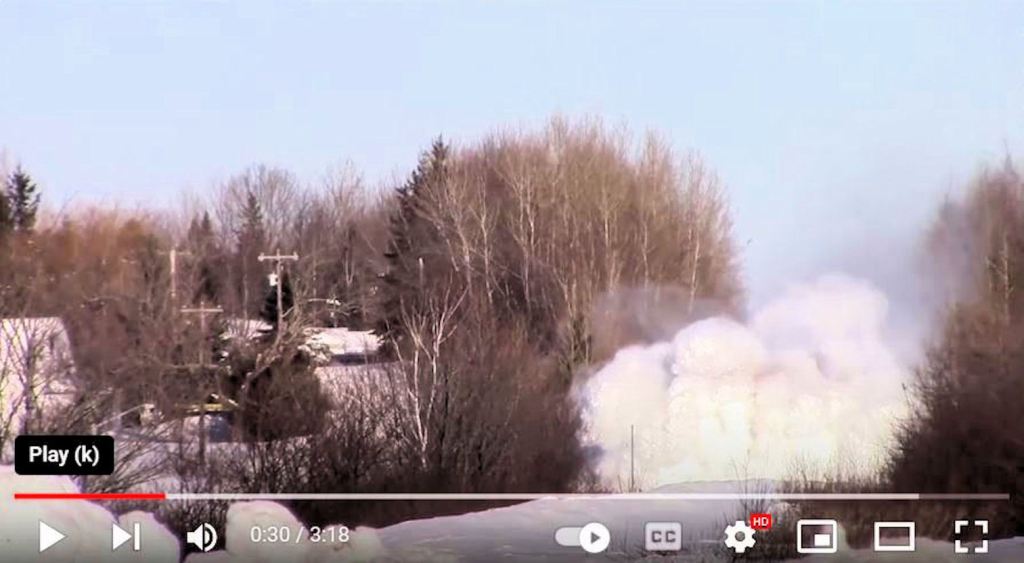
Credit Darren Gordon and CBC.
 E.J. Lavoie's Blog 3