
Recollections of Round Lake Bible Camp
Edgar J. Lavoie

The Lavoie family has fond memories of the Camp in the ’50s and ’60’s. When I was 14, I believe I attended the summer of 1954. But my memories are compromised by my attending a rural Baptist Bible Camp near Lloydminster, Saskatchewan, when I was 12 or 13. I confuse the two experiences, so I rely on the recollections of my siblings: Grace, John, and Susanne.
In that era, Round Lake Bible Camp was sponsored by Rural Life Mission, and being members of Jonesville Gospel Church (in Geraldton), we kids qualified. John began his sojourns at the camp in 1955 at age 9, and returned every summer till 1958.
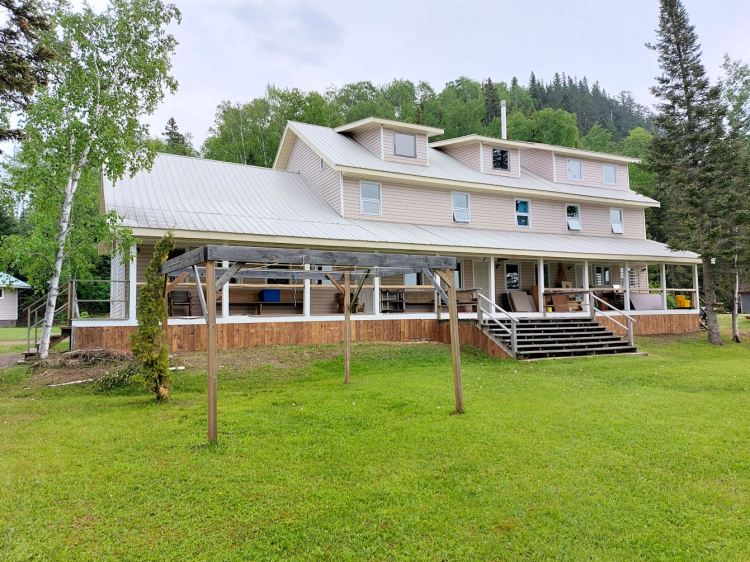
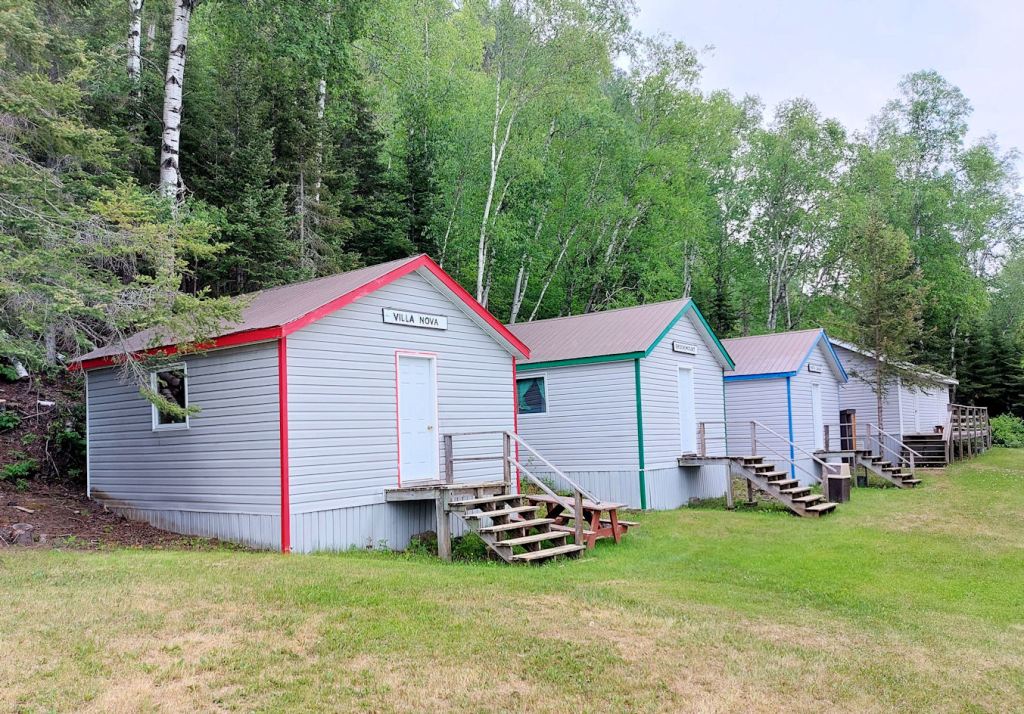

John recalls the trips: “Catch the bus beside the CN station in Geraldton and then debark by the polka-dotted tourist pagoda on Port Arthur waterfront. There was never anyone there to meet us so it seemed we waited hours for our ride to Camp ̶ usually our chauffeur was Pastor Gould from Port Arthur’s Faith Chapel.”
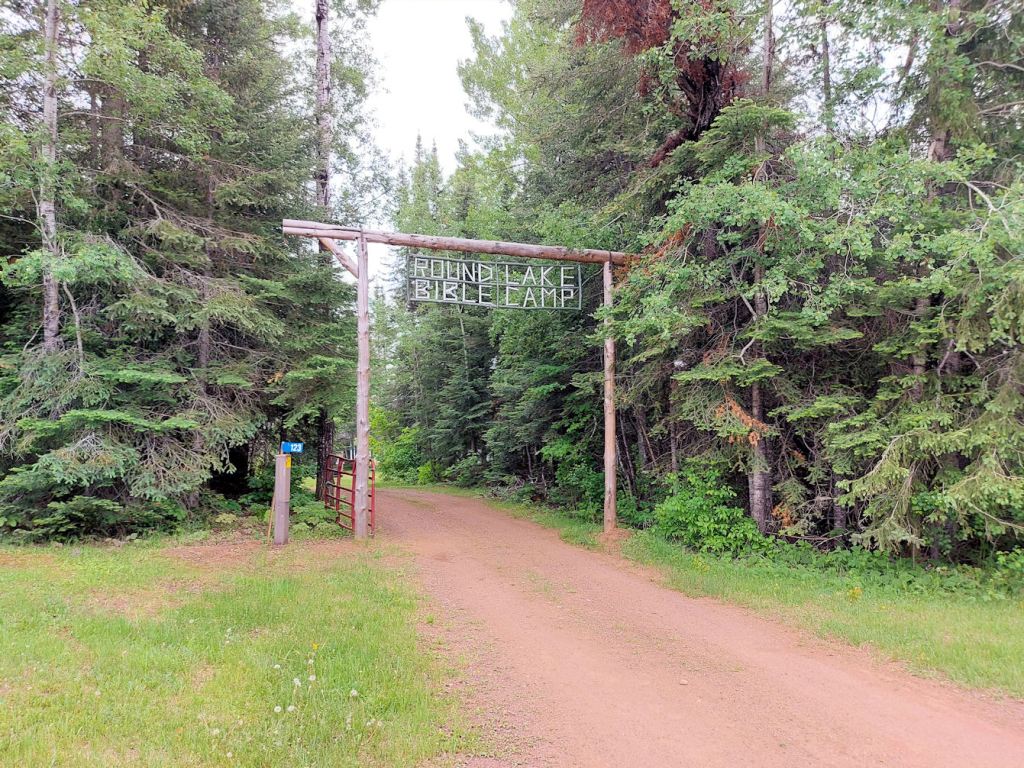
To reach Round Lake Bible Camp today, travel west on Highway 11 about 20 klicks to the Stanley turnoff just before Kakabeka Falls. Travel south 1.2 km to the Stanley Hotel, cross the Kaministiquia River, and continue west and south on Hwy. 588, a paved road, for another 53 km. Pass through the scattered communities of Nolalu and Suomi, past Whitefish Lake, and turn left (south) at the sign. Another 1.2 km on a gravel road brings one to the portal.
On June 17, when I visited, nobody was home. According to Facebook posts, volunteers had devoted the previous week to getting the Camp shipshape. The season’s schedule was:
July 16-21 ̶ Girls Camp Ages 9-12
July 23-28 ̶ Girls Camp Ages 13-15
July 30-Aug 4 ̶ Boys Camp Ages 9-12
Aug 6-12 ̶ Boys Camp Ages 13-15
John cites a similar schedule, but recalls that each session was 10 days, and the registration fee, $10.
“. . . Clapboard cabins were furnished with double bunk beds. No electricity. Plumbing was an outhouse and wash water was the lake. Each cabin had its own name. The dining room had long rows of communal tables and benches. Meals were good but plain ̶ usually hot oatmeal, peanut butter for breakfast. No snacks between meals . . . Tuck Shop was a popular daily opportunity to buy sweets with your own money.”
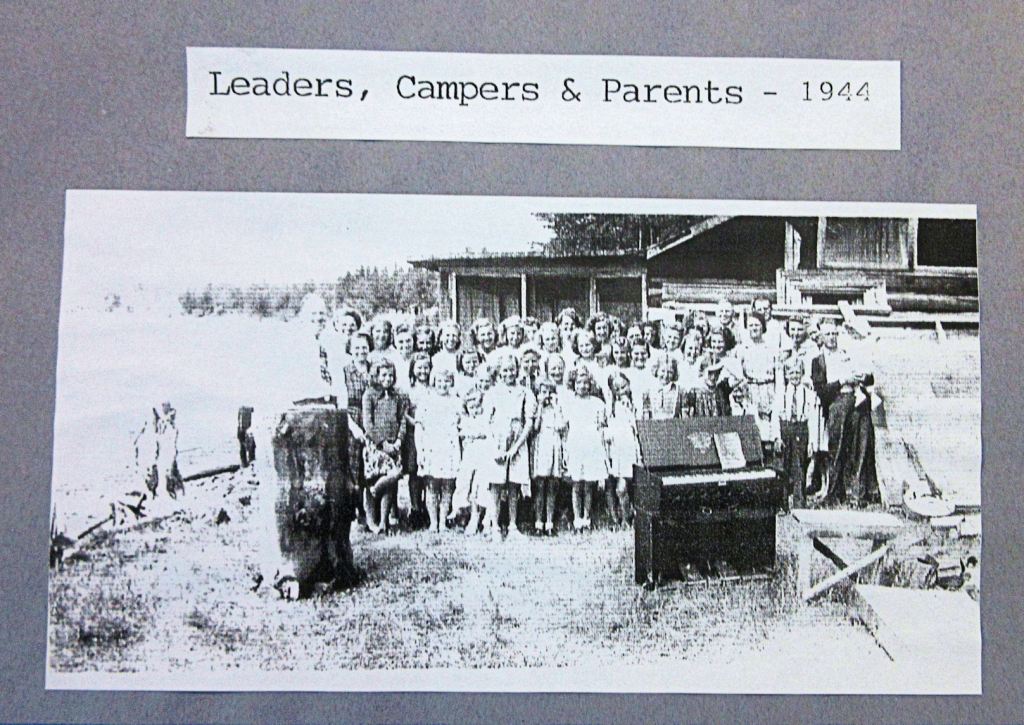
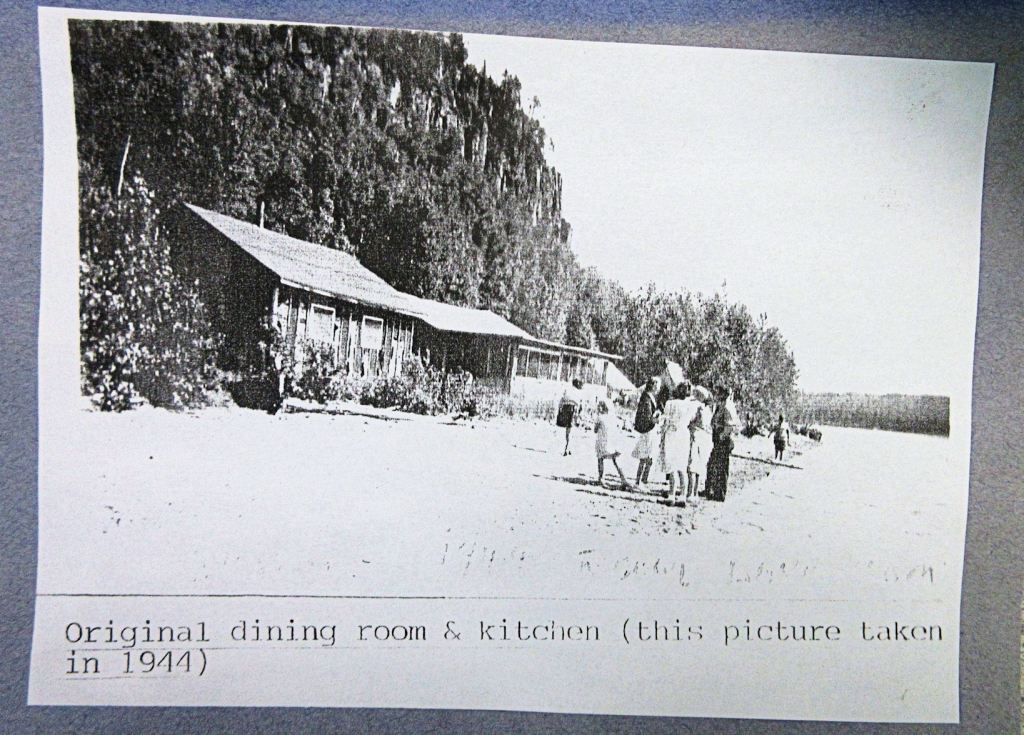
John remembers Chapel twice a day an hour long, morning and evening. “Recreation activities were swimming, baseball, plaster of Paris crafts, campfire. One of the most popular events was the day we ‘climbed’ the mountain ̶ this required us to hike a trail up the back side of the huge cliff that towered behind the camp. View from the top was impressive.”
Grace recalls attending the Camp, probably twice, between the ages of 10 and 13. At age 13, she attended as a Counsellor for younger kids, working in the kitchen. Years ago, Grace shared one memory with me: she complained to the Camp Director, Pastor Robert “Bob” Miller, that the cracks in the walls of her cabin let in the mosquitoes at night. Pastor Miller replied, “Grace, those cracks are not there to let the mosquitoes in. They’re to let the mosquitoes out.”
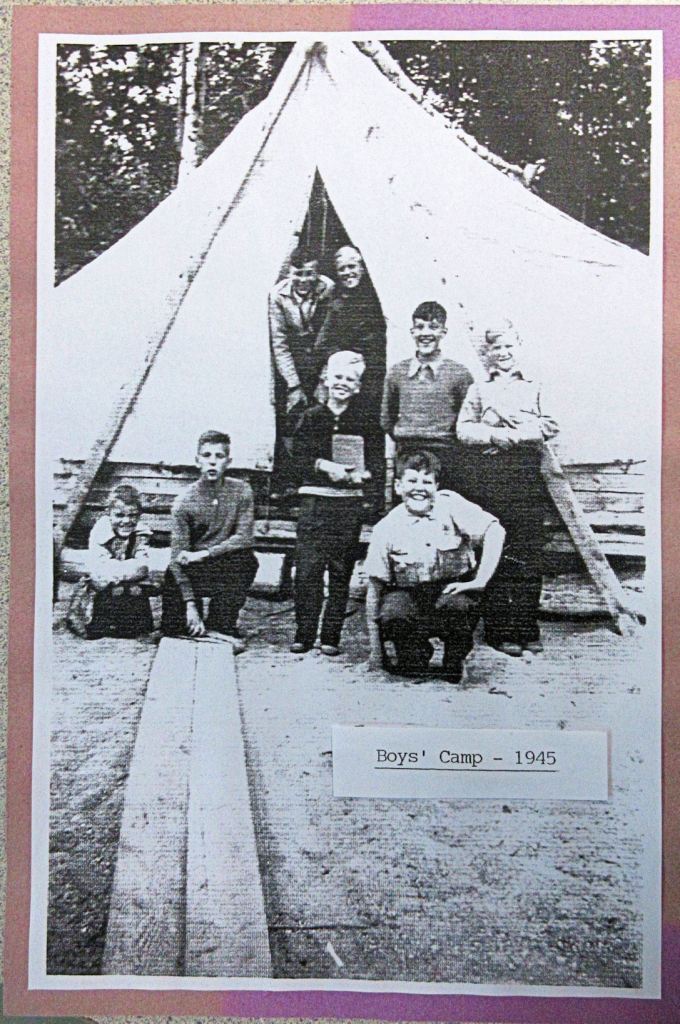
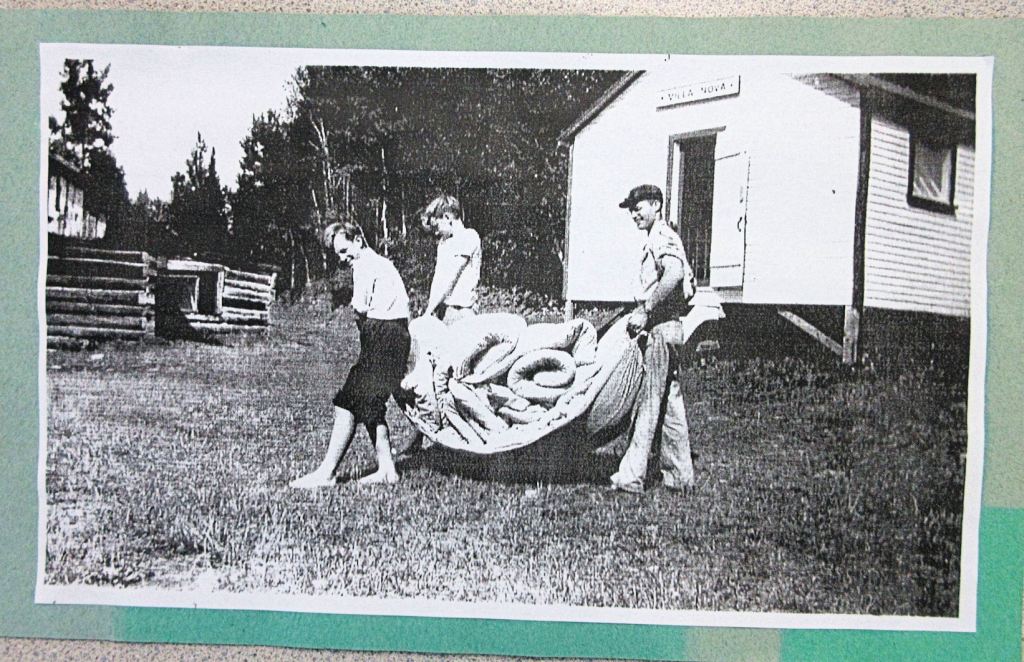
The cabins had no running water. “We had to do our morning ablutions from the dock . . . The daily organized swim times helped keep the rest of our body clean-smelling The outhouse was at the end of the girls’ cabins down a long path. It was pretty scary at night.” As for Chapel, “our Cabin Counsellor led us in prayers before bed and in the morning upon arising.” While waiting in line for meals, the kids sang a song:
Here we stand like birds in the wilderness,
birds in the wilderness,
birds in the wilderness,
Here we stand like birds in the wilderness,
waiting to be fed.
(REPEAT with last line “waiting for our soup”)
(REPEAT with last line “waiting for our bread”)
(REPEAT with last line “waiting for our meat”)
(REPEAT with last line “waiting for our dessert”)
[Credit Grace’s memory assisted by Google Search]
After evening Chapel, a favourite activity was songs around the campfire, “with Taps at the end”. At bedtime, each cabin received a plate of jam sandwiches. Grace recalled this most popular lyric of Taps:
Day is done, Gone the sun,
From the lake, From the hill,
From the sky.
All is well, Safely rest,
God is nigh.
There were several fun activities. Grace learned to row a boat, and all the kids took turns. They climbed the mountai behind the buildings: “I recall how slippery the shale was.” They were taught how to use a bow and arrow.
“I learned how to swim and dive off the dock (I had previously been traumatized when I was about 9 when my loving brother tried to teach me how to swim by throwing me off the dock at Camp 35 [Longlac Pulp & Paper Co.] where Dad was working.”

In 1964, when Susanne was 13, she remembers rolling through the portal (gateway) in a bus full of excited kids. They were greeted by the Millers and several Counsellors. They were shown to their cabins with linens placed at the foot of the beds. They were shown where the outhouse was. It was a scary trip at night time with a buddy, even using flashlights. “I remember someone losing a light down the hole. Nobody was brave enough to retrieve it.”
At meal time, a bell rang out. A prayer of thanks was said before every meal. Breakfast was porridge, toast, and scrambled eggs. Once during the week, a meal was eaten “backwards”, starting with dessert. Kids took turns washing up the dishes. At bedtime, a Counsellor asked what they wanted for a snack and were offered white or brown bread. The favourite was peanut butter and jam. Sue recalls that the bread with cut into four finger sandwiches. Others delved into their bags of penny candies.
Mornings , they had to make up their bunk beds in a certain way, eliminating wrinkles and lumps. Susanne remembers that one morning she was asked to explain a lump in her bed, and sheepishly admitted it was her teddy.
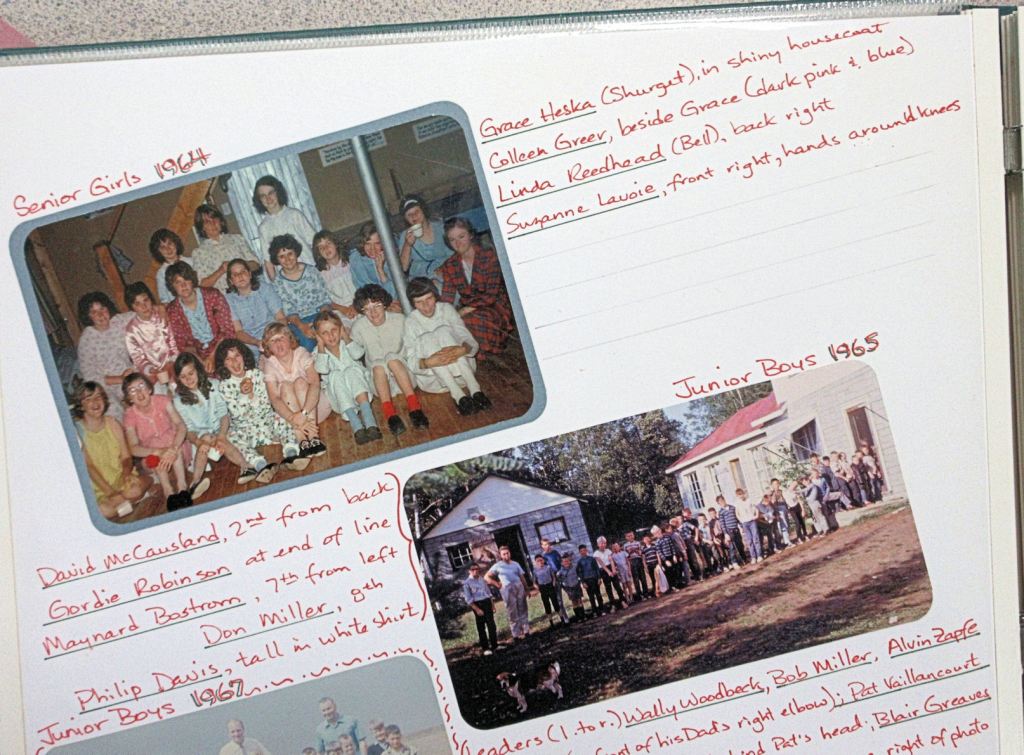
Tuck Shop at 2:00 p.m. offered a variety, such as cherry blossoms, sponges, tootsie rolls, blue (banana-flavoured) popsicles, creamsicles, glass-bottled pop, and lots of penny candy. To this day she loves to visit corner stores to check out their stock, looking for items from yesteryear.
There were fun things to do. “We paddled across Round Lake one afternoon and then portaged a trail over to Atik Lake.” Another day they paddled to the end of the lake. “I remember distinctly Mr. Miller pointing to an eagle’s nest on the side of the mountain, making sure we didn’t miss seeing it.” Another day, on a trail behind the mess hall, they climbed a ways up the mountain with an adult.
One day was Creative Day. They used popsicle sticks (bought in a store) to make useful things such as trivets and pencil holders. To this day, Sue has the booklet of instructions for making crafts with popsicle sticks.
Susanne remembers church services and a swimming schedule.

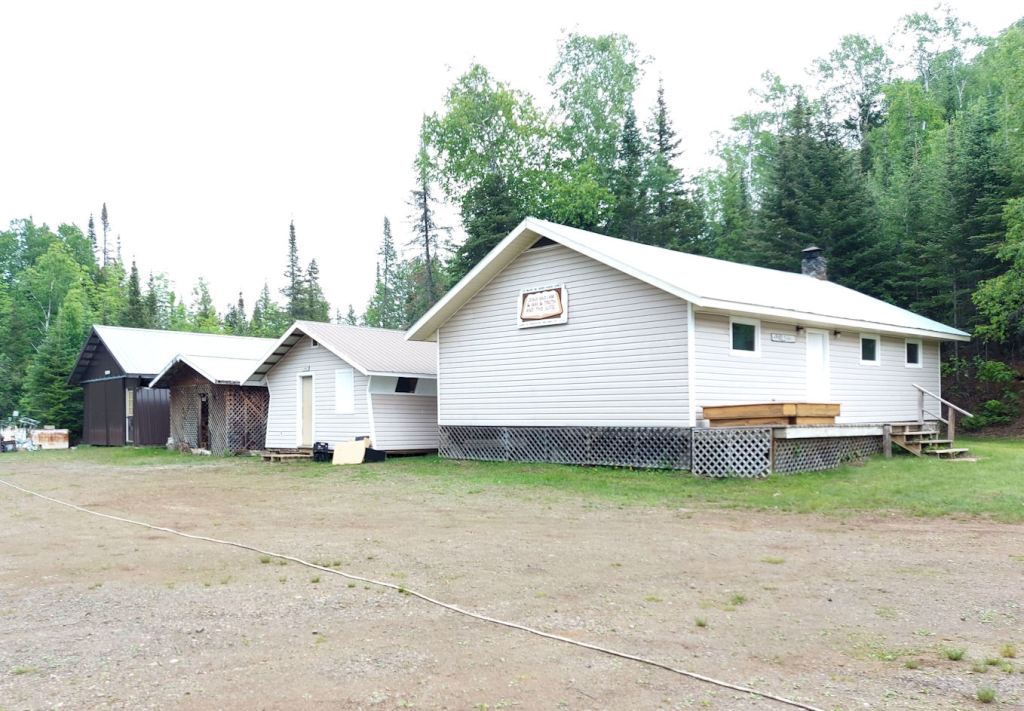
to right, with the “mountain” rising above them.
On Wednesday afternoon, July 19, Susanne and I visited the Camp when Junior Girls were in attendance. We had good dialogue with Bryan and Susanne Zietsma, Camp Directors, in the lodge’s small dining room, located between the chapel (with chairs for seating dozens) and the bustling kitchen. I was primarily interested in capturing historic images in the photo albums. Sue exercised her gift for socializing.
Bryan asked one of the kids outside, a Cabin Leader, to show us one of the cabins. The pristine quarters featured beautifully crafted triple bunk beds. Kids cavorted on the swings or in the water.
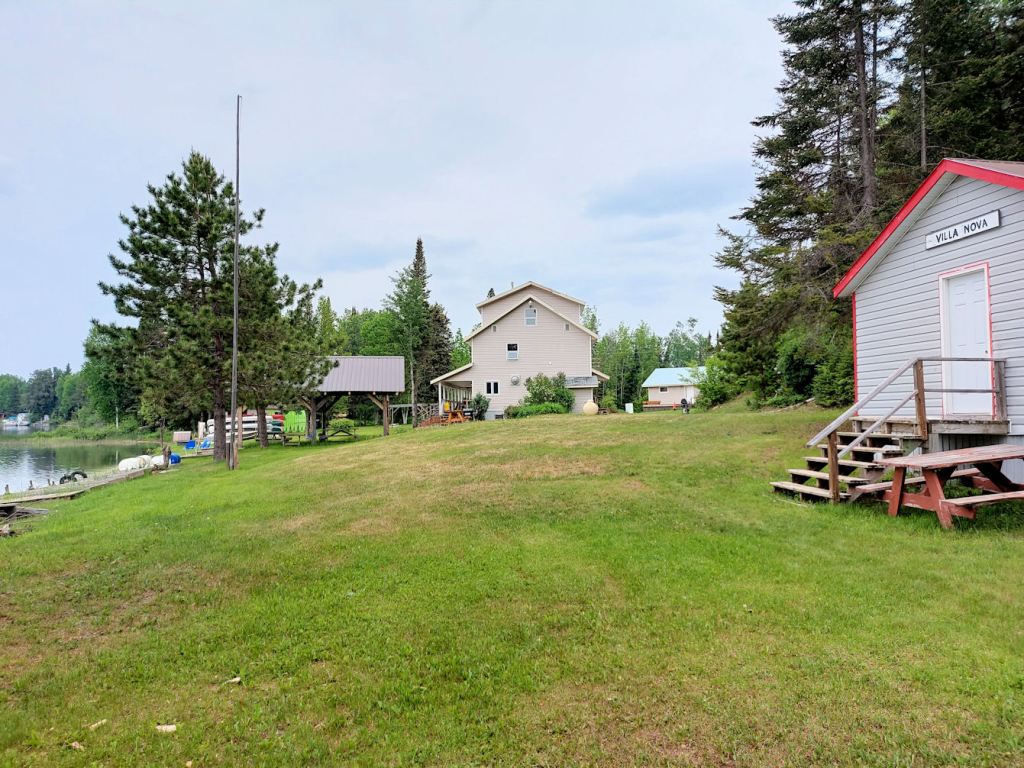
Susanne and Grace do not recall any “characters” in the Camp. John recalls one kid who was “an extreme bully who terrorized almost every kid in Camp. Mr. Gould eventually ‘disciplined’ him with his leather belt, but I can’t remember if he was ousted from camp.”
I remember one adult character at the Camp near Lloydminster. He was one of the Directors or Leaders. At the end of every meal, he made a practice of cleaning up every plate and bowl that held leftovers. Yet he was skinny as a rail.
At this Camp, we ate in the open air. Mornings began with a dip in the frigid lake whether we liked it or not. My favourite activity was climbing a hill on top of which was a store where I could indulge my sweet tooth. Craft time was devoted to my carving a stencil out of a floor tile and printing off a black-and-white image (which I never saved and have thankfully forgotten ). One night we camped in a tent, without anyone supervising us. I finally twigged that I was getting colder and wetter because the tent had blown away in a storm. I have fictionalized that event in a story I recently wrote titled “Camp Grenada Two”.
Neither Rural Life Mission nor Round Lake Bible Camp have much of a presence online. The Mission was incorporated in June 1945, but their capsule history implies that the Camp began in 1936. Historic photos do not support this. Still, it is gratifying that the Mission and the Camp played such an important role in our lives. Grace wrote, “My most lasting memory of Bible Camp was being surrounded by love and caring. Of course, the opportunity to spend a week in paradise was amazing for a kid from a small town in the middle of the bush. My singing voice was encouraged when I was asked to sing the occasional solo during Chapel services. When I moved to Sault Ste. Marie, my children attended Galilean Bible Camp just outside of Blind River, and I joined them as a Counsellor.”
So, did the “Bible” in “Bible Camp” stick with us? I think so. But not in the way that Rural Life Mission envisaged it. After we left Jonesville Gospel Church, Grace for a time attended a United Church in the Soo. Susanne and I often attend special services around Christmastime. In my writing I often reference, even take inspiration from, biblical passages. And we have lived good, honest lives while respecting others’ beliefs.
Yes, Bible Camp was one of the highlights of our lives.


 E.J. Lavoie's Blog 3